Dewey's school was a laboratory, and it was literal
The University of Chicago Laboratory School opened in 1896 not to apply a philosophy but to test one — and the experiment ran on children, not on paper.
The school as instrument
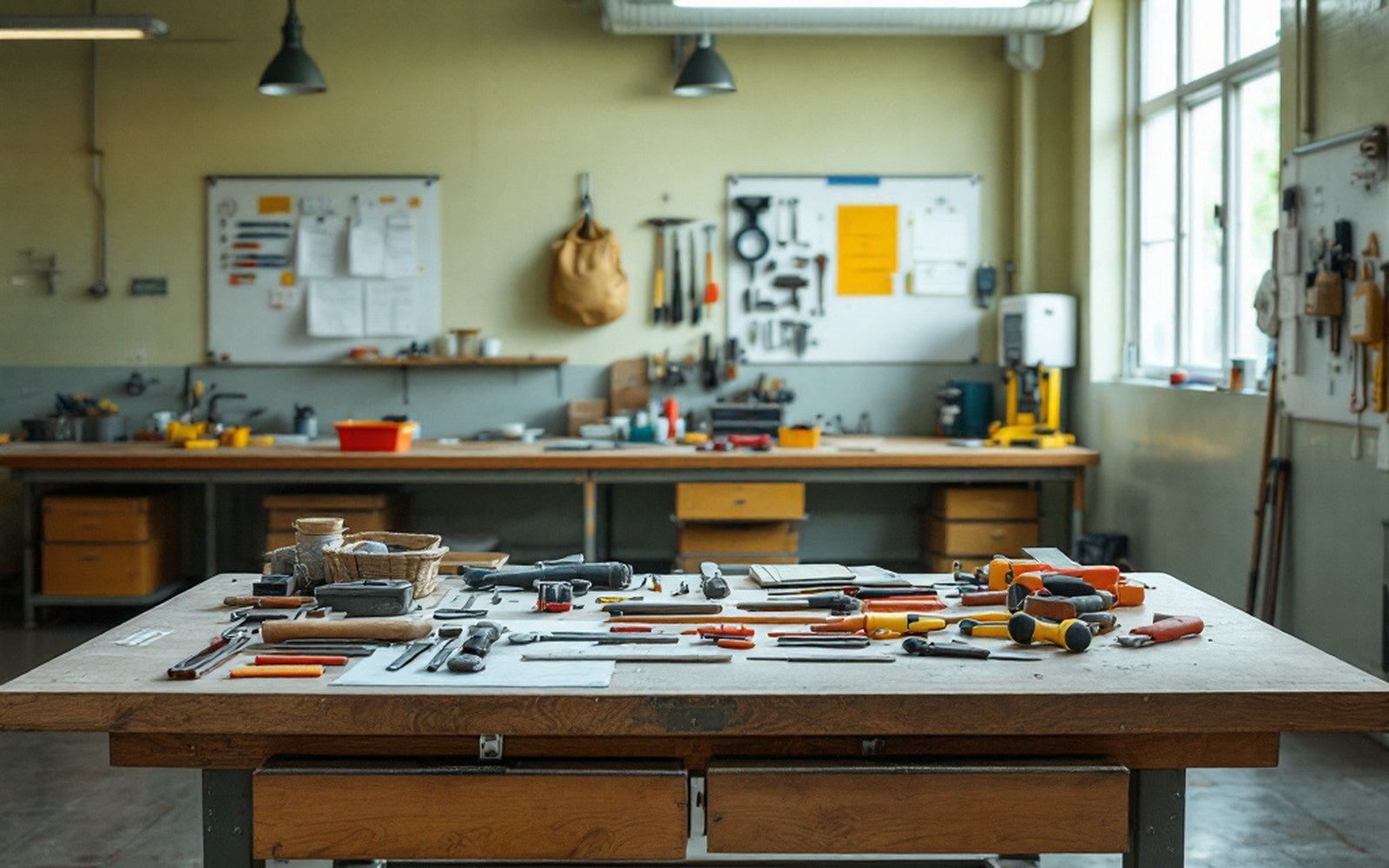
John Dewey arrived at the University of Chicago in 1894 as chair of the Department of Philosophy, Psychology, and Pedagogy. He was not yet the dominant figure American education would make him; he was a philosopher with questions about how children actually learn, and no data. The Laboratory School — opened in January 1896 with a handful of students and two teachers — was his apparatus for gathering it.
The name was deliberate and precise. Dewey modelled the school on the university research laboratory: a place where hypotheses are tested against results, revised, and tested again. The curriculum was not fixed in advance; it was adjusted term by term as Dewey and his collaborators observed what children did when they were asked to cook, sew, build, garden, and work through genuine problems. The school grew quickly, reaching around 140 students by the early 1900s, drawn largely from University of Chicago faculty families — a sample that was, by any measure, socially narrow.
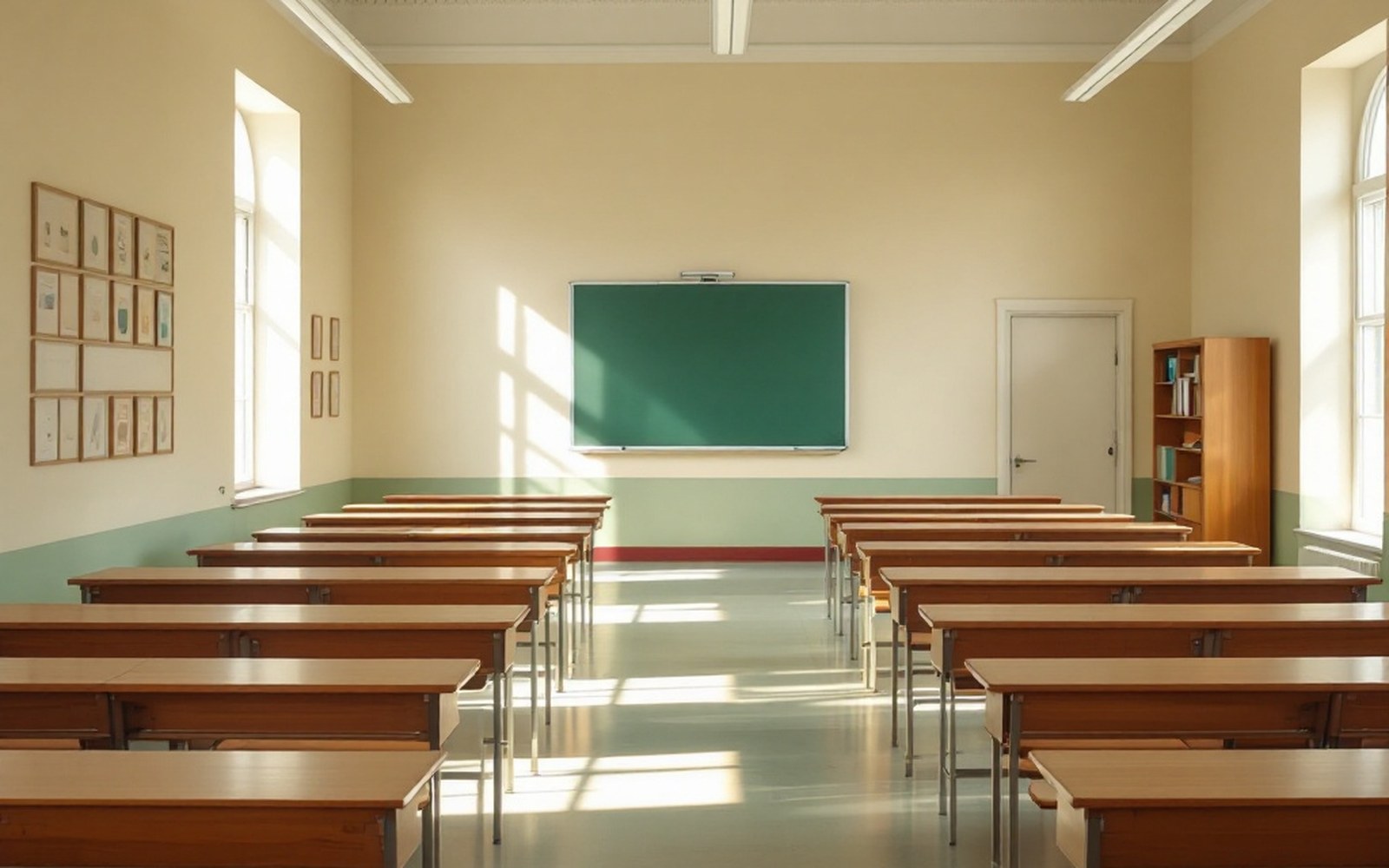
What Dewey was testing was a proposition: that learning is a form of doing, not a form of receiving. The formal classroom of the late nineteenth century organised children into rows to receive instruction they were then asked to repeat back. Dewey thought this severed thinking from action in a way that made both worse. His laboratory was designed to see whether reconnecting them changed the result. The occupations — cooking, carpentry, weaving — were not vocational training; they were vehicles for mathematics, science, and language, because they required children to measure, hypothesise, and communicate in order to accomplish something real.
What came out of it
The theoretical architecture Dewey built from the school's operation appeared in two short books published while the experiment was still running: The School and Society (1899) and The Child and the Curriculum (1902). Both were written for a general audience and both were widely read — the first grew from lectures Dewey gave to raise money for the school's equipment. The ideas in them — that experience is the medium of learning, that the school should connect to the life of the community, that interest and effort are not opposites — became the foundation of what would be called progressive education.
Dewey left Chicago in 1904, partly over a dispute with the university's administration about the school's leadership. His wife, Alice Chipman Dewey, had been running the school; her removal was the immediate cause of the break. The University of Chicago Laboratory School continues to operate today as a pre-K through twelfth-grade institution, under that same name, still affiliated with the university.
The influence Dewey's experiment exerted on American public education was large and uneven. Progressive methods spread into public school rhetoric faster than they took hold in practice. Mid-century critics — and there were many, particularly after the Soviet launch of Sputnik in 1957 — blamed Dewey for what they called a softening of academic standards, a charge that often rested on a caricature of what the Laboratory School had actually done. Dewey himself spent decades clarifying that experience-based learning did not mean the absence of intellectual rigour; his 1938 book Experience and Education was largely a correction of misreadings of his earlier work.
What the Laboratory School demonstrated, in the end, was something structural as much as pedagogical: that educational theory detached from observed practice tends to drift. Dewey understood this from the start, which is why he built a school before he finished the philosophy. The experiment informed the theory, and the theory then had to survive contact with the scale and diversity of a public system it was never designed for — a problem the American system is still working out.
- 1894Dewey joins University of Chicago as department chair
- January 1896Laboratory School opens with two teachers and a small cohort of students
- 1899The School and Society published, drawn from fundraising lectures
- 1902The Child and the Curriculum published
- 1904Dewey leaves Chicago after dispute over school leadership
- 1938Experience and Education published, correcting misreadings of progressive theory
- 1957Sputnik launch intensifies public criticism of progressive education
- Occupations: cooking, carpentry, weaving, gardening — used as vehicles for academic content
- Student body: roughly 140 at peak, predominantly from university faculty families
- Staffing: grew from two teachers to a larger faculty over the school's first decade
- Funding partly raised through public lectures, later published as The School and Society