The oldest thing in a district is usually the building
A bond issue is harder to pass than a budget line, so a district's building stock is a record of the elections it won — and the ones it lost.
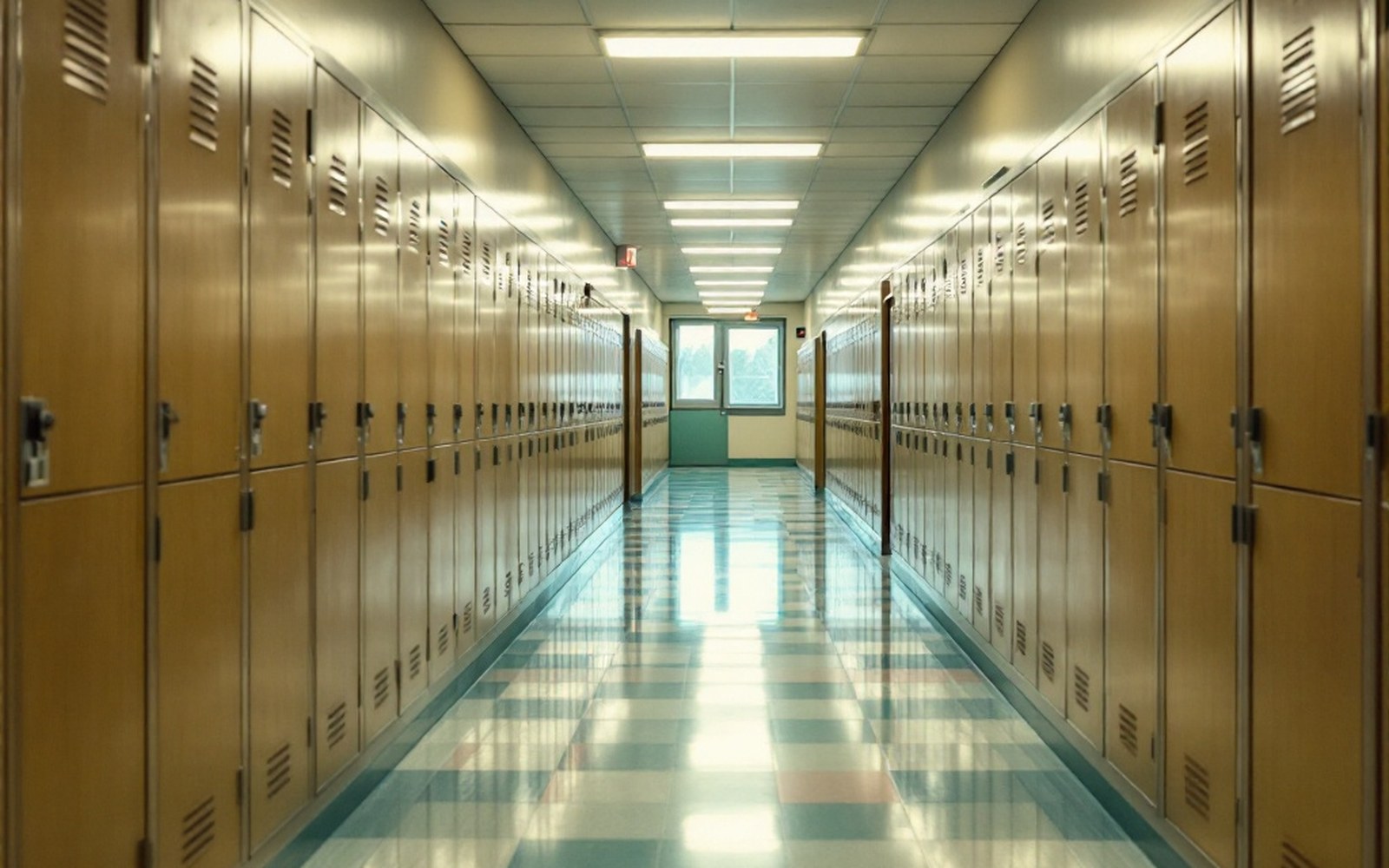
The bond is the mechanism, and the vote is the constraint
State constitutions assign public education to the states, but they also push the operational work — including construction — down to locally governed school districts. A district's capital budget and its operating budget are legally distinct things in most states. Day-to-day expenses flow through the annual operating budget, which a board can adjust year to year. A new gymnasium, a rebuilt roof load-bearing enough to carry solar panels, or an entirely new building is a capital expenditure, and in most states capital expenditure at any real scale requires a bond issue: the district borrows money by selling bonds to investors, pledges its property-tax base as security, and asks voters to approve the debt. That approval typically requires a supermajority — fifty-five percent in California, for instance, since Proposition 39 in 2000 lowered it from two-thirds.

The result is that a district's building stock is not simply old or new; it is stratified by the bond elections the district has passed, often decades apart. A classroom wing built in 1962 may sit attached to a science lab from 1987 and a gymnasium from 2004, each representing a separate vote and a separate debt cycle. Districts that have not passed a bond in twenty or thirty years are running buildings designed for a different curriculum, different energy prices and different fire codes.
What the plant actually contains
The term "school plant" is the administrative umbrella for every physical asset a district owns and maintains: the buildings themselves, the land they stand on, the mechanical systems inside them (HVAC, electrical, plumbing), the fixed furnishings, the athletic fields and portable classrooms, and the support facilities — maintenance yards, bus depots, administrative offices. The plant is simultaneously a service-delivery system and a fixed liability. A district must heat, cool, insure and repair its plant whether or not it has the money to do so well.

The scale of the national inventory is substantial. The Government Accountability Office estimated in 2020 that more than half of American public school districts reported needing to update or replace multiple building systems, with HVAC most commonly cited. The average public school building in the United States is more than forty years old, meaning the typical school was designed before personal computers, before the Americans with Disabilities Act, and before current ventilation standards. Age alone is not the problem — well-maintained masonry buildings from the early twentieth century can outlast poorly maintained 1970s concrete-block structures — but age combined with deferred maintenance is.
Deferred maintenance and the budget competition
Maintenance is the mechanism that turns a recent building into an aging one faster than necessary, and deferred maintenance — work that was needed but postponed — is endemic in school districts because maintenance competes directly with instruction inside a single operating budget. A superintendent who must choose between retaining a reading specialist and replacing a boiler faces a straightforward political calculus: the reading specialist is visible, the boiler is not, until it fails.
The deferred maintenance backlog across American public schools has been estimated in the hundreds of billions of dollars, though precise figures vary by methodology and year. What is consistent is the structural cause: operating budgets are under annual political pressure, capital budgets require a vote, and the gap between necessary upkeep and actual spending accumulates quietly until a building fails inspection or a roof collapse forces emergency expenditure — which is almost always more expensive than the maintenance would have been.
Equity and geography
Because the property-tax base determines both a district's operating revenue and its debt capacity, construction follows the same geography as operating funding. Wealthy districts with high assessed property values can borrow more, service debt more easily, and attract bond-election majorities among homeowners who expect the investment to hold their property values. Property-poor districts can pass bonds too, but they raise less money against more fiscal strain, and the communities in them — often renters, often lower-income — face the same regressive dynamic built into the local property tax as the primary funding mechanism.
- Pre-2000California bond threshold: two-thirds supermajority required
- 2000Proposition 39 (California) lowers threshold to 55%
- 1966Coleman Report: facilities explain little variance compared with family background
- 1973San Antonio v. Rodriguez: no federal constitutional right to equal school funding; capital equity left largely to states
- 2020GAO report: majority of districts need to update or replace multiple building systems; average building age over 40 years
The constitutional question about whether this arrangement violates equal protection was answered, at least at the federal level, in San Antonio, Texas in 1973. The Supreme Court's decision in San Antonio Independent School District v. Rodriguez held that education is not a fundamental right under the federal Constitution, and that disparities in per-pupil spending driven by local property wealth do not violate the Fourteenth Amendment. States are free to address the disparity through their own constitutions and funding formulas; some have done so aggressively, others barely at all. But the ruling left capital expenditure — construction and renovation — largely outside any equalization framework, since state aid formulas are almost entirely directed at operating costs.
What the building says about the district
The physical condition of a school building has been studied as both a cause and an effect of educational outcomes, though causation is genuinely difficult to isolate. James Coleman's landmark 1966 report, commissioned by the federal government and covering more than 600,000 students, found that physical facilities explained far less variance in student achievement than family background — a finding that still provokes debate. Subsequent research has examined specific conditions: ambient temperature, air quality, noise levels and lighting have all been associated with measurable differences in attendance and concentration, though effect sizes vary across studies.
A district must heat, cool, insure and repair its plant whether or not it has the money to do so well.
What a building says unambiguously is something about administrative history. A district whose newest secondary school was built in 1971 has not passed a secondary bond since 1971. The building is a record of political will, local wealth, demographic trend, and timing — was the bond on the ballot in a presidential year or an off-year with low turnout? Did interest rates make the debt service look alarming? Did a previous bond spend badly, eroding trust? The school plant carries all of this history in its brickwork.
Districts that grow fast face a different version of the same problem: they must build quickly and often borrow at whatever terms the market offers, producing construction debt that can crowd out operating spending for a generation. Districts that shrink — as many Rust Belt and rural districts have — sit in buildings designed for twice their current enrollment, paying to heat and maintain space they cannot close because closing a school is its own political act.
The building outlasts the bond cycle that built it, the board that approved it, and usually the superintendent who opened it. That is why the oldest thing in a district is usually the building.
| Buildings and land | the core fixed asset |
| Mechanical systems | HVAC, electrical, plumbing; most commonly cited for needed replacement |
| Fixed furnishings and portable classrooms | |
| Athletic fields, maintenance yards, bus depots, administrative offices |